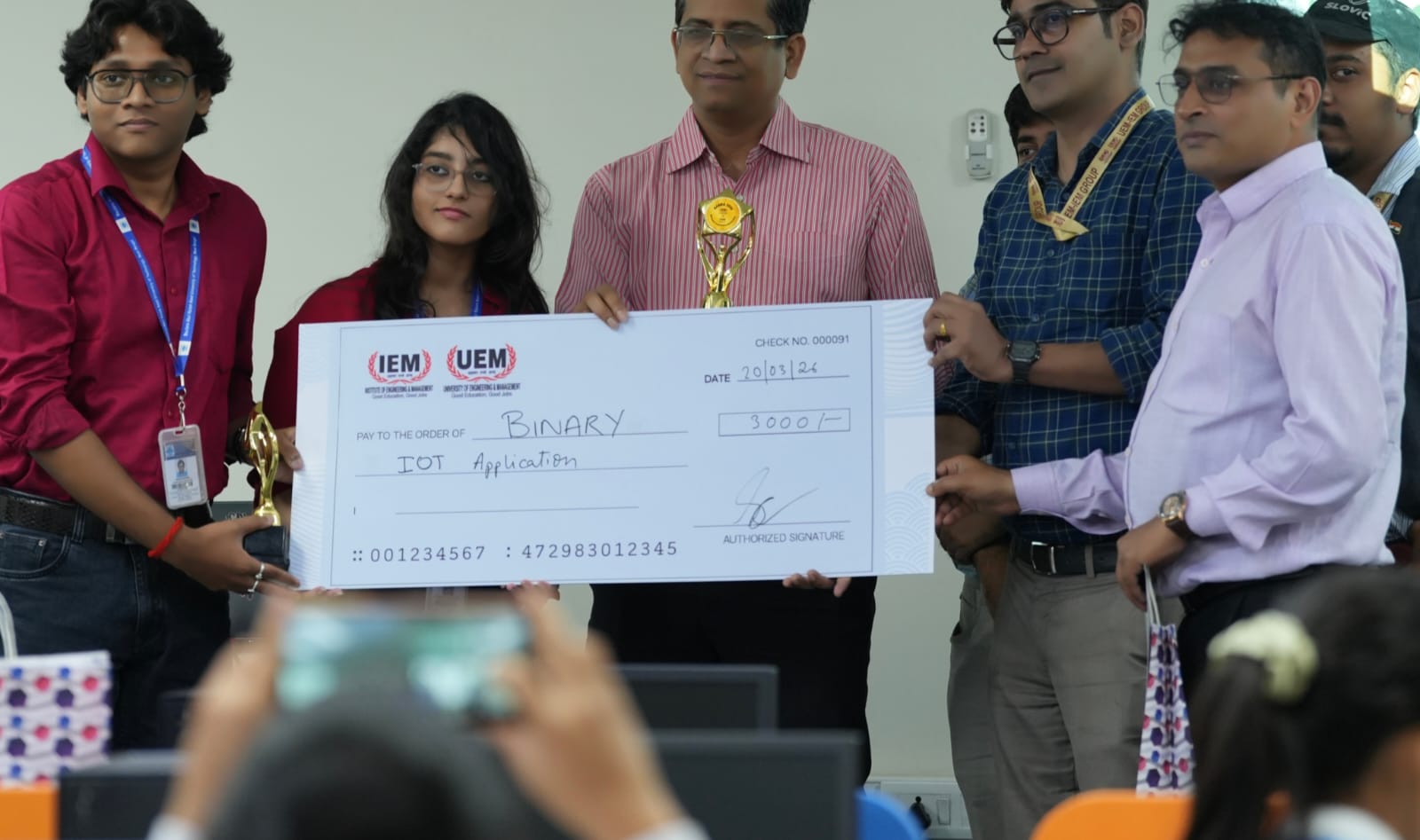
When the announcement for AXIORA 2026 floated across my screen - organized by the ISF of IETE in collaboration with SCE (AIML), CSBS, and IEM Saltlake - it felt like the perfect opportunity to test the waters. Winning Makathon earlier with my She-Shield project had given me a huge boost of confidence, but competing outside the familiar walls of our university was a whole new ballgame. Applying was easy; getting the email that we were selected for the 48-hour online hackathon was the moment things got real. Suddenly, the clock was ticking.
This is the story of Team Binary - led by my brilliant teammate, Aparajita Chattopadhyay, and myself - and how we spent two sleepless days turning a pile of components and lines of code into an award-winning project. It is a reflection on the chaos, the coffee, the endless debugging, and the incredible moment we realized our hard work had actually paid off.
The Vision: What is ParkAssist?
Before diving into the 48-hour frenzy, here is a quick look at what we set out to build. We wanted to solve a real-world problem with accessible tech, which led to ParkAssist: a low-cost, embedded system paired with a web dashboard designed for parking assistance and near-field obstacle awareness.
We mapped it out: I would use ultrasonic sensors to calculate left/right distances and fuse the angle data, paired with an ESP32-CAM to stream MJPEG video. The real magic, however, was the optional AI object detection layer using YOLOv8, running on a local machine and streaming real-time bounding boxes to our dashboard via WebSocket. We wanted it to be seamless - in normal hardware mode, the user just connects to the device's Wi-Fi and opens the browser. No manual IP input, no complicated setup.
The 48-Hour Sprint: March 17th to 18th
We officially kicked off on March 17th, and the division of labor was clear from minute one. Aparajita took complete ownership of the software, diving into the heavy lifting of the AI backend and the WebSocket architecture, while I set up my workbench to tackle the hardware.
My desk quickly turned into a familiar disaster zone of jumper wires, breadboards, and microcontrollers. If you have ever worked with hardware under a strict deadline, you know the drill: write the code, flash the board, test it, watch it fail, figure out why, and repeat. There were moments of deep frustration when the ultrasonic sensors refused to give stable readings or the ESP32-CAM stream lagged terribly. I spent hours hunched over my desk, breathing in the distinct, slightly acrid smell of soldering fumes, making sure every single physical connection was solid enough to survive a live demo without a wire popping loose.
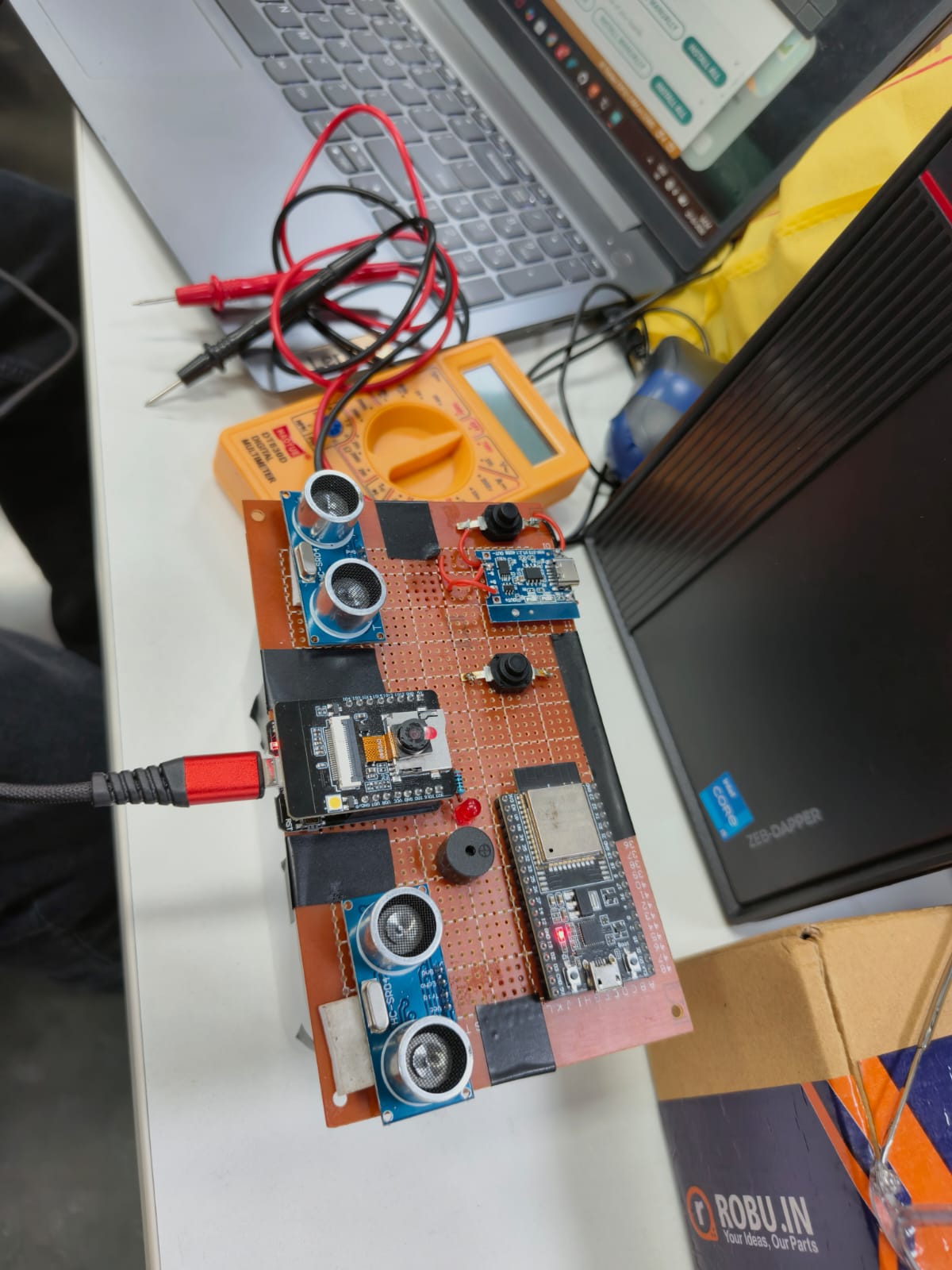
While I was battling sensor calibration and hardware bugs, Aparajita was steadily building out the YOLOv8 object detection. The real test - and the most nerve-wracking part of the hackathon - came when we had to integrate her software backend with my hardware setup.
Making that Minimum Viable Product (MVP) work was a massive relief. Seeing the physical sensors and the camera feed finally talking to the frontend dashboard, with the AI identifying objects in real-time, was one of the most rewarding moments of the entire event. We pushed our final code and hit submit late on the night of March 18th, utterly exhausted but proud of what we had built.
The Call and The Finals
The next day, March 19th, was an agonizing waiting game. You constantly refresh your email, wondering if your project was good enough to stand out. Then, right around 3 PM, my phone buzzed. It was Aparajita. We had made it to the final round!
Suddenly, the sleep deprivation vanished. We spent the rest of the evening prepping our pitch and making sure the fragile hardware was packed securely for transport. The final showdown wasn't online - we were heading to the IIT Kharagpur Research Park in Newtown, Kolkata.
On March 20th, we walked into the presentation room at the research park. To be completely honest, our pitch didn't go exactly the way we had practiced. We stumbled a bit on our words, and the pressure of presenting to the judges live in such an imposing venue was intense. But when it came time to actually show the tech, the MVP spoke for itself. The sensors worked, the camera streamed, and the dashboard updated just like it was supposed to.
What really stood out, though, was how incredibly supportive the judges were. Instead of just evaluating us and moving on, they took the time to give us valuable tips and constructive criticism. They guided us on how we could refine the architecture and make the system even better for real-world application.
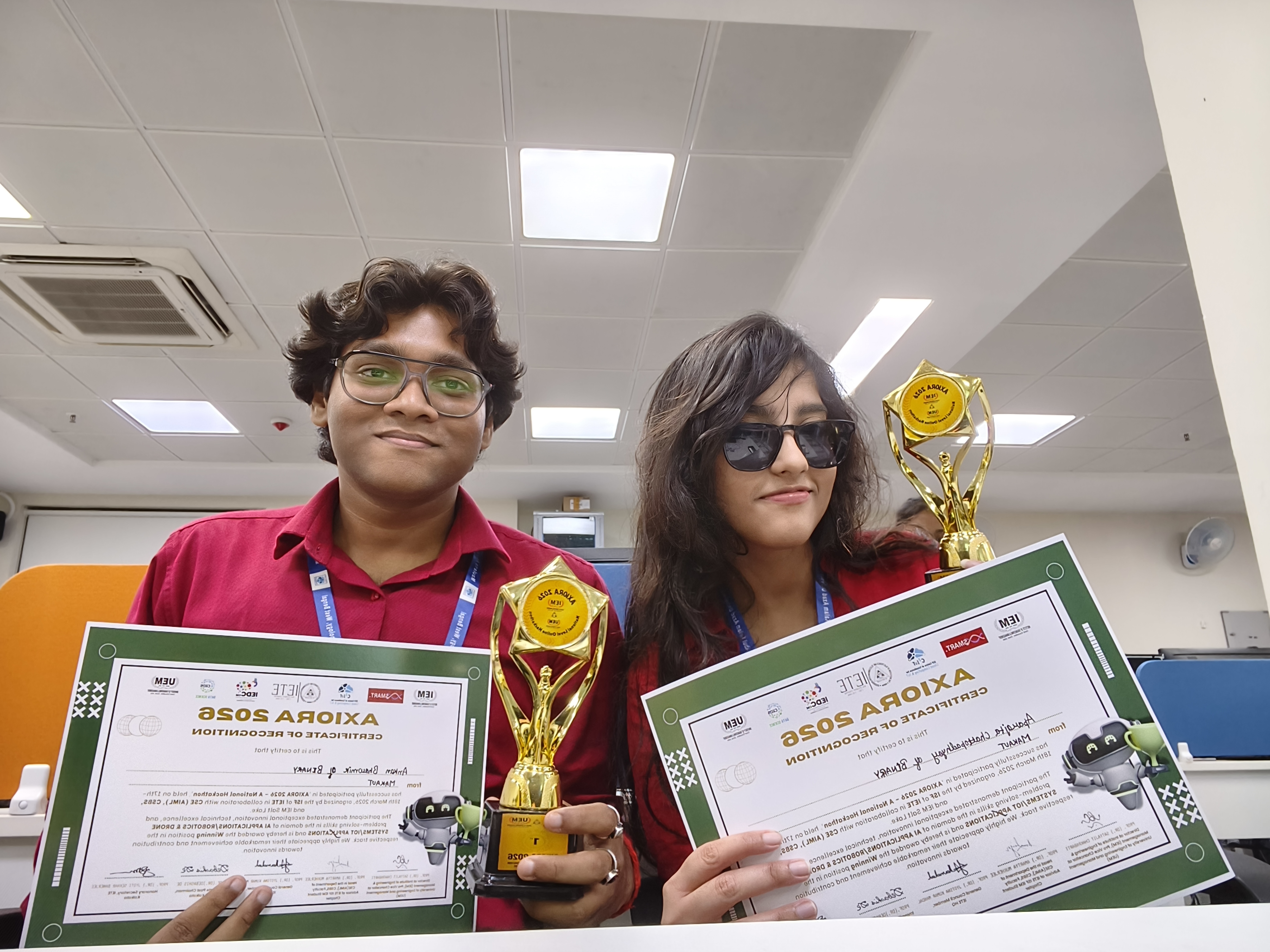
We walked out hoping for the best but expecting nothing. When the results were finally announced, we were absolutely stunned: Team Binary had secured the Winner position in the IoT Track!
A Few Things I Learned Under Pressure
Looking back at those intense 48 hours, here is what this hackathon taught me:
- Trust your teammate completely. Division of labor only works if you trust the other person to deliver. Aparajita's backend work was flawless, which allowed me to hyper-focus on getting the hardware right without constantly looking over my shoulder.
- Hardware will test your patience. Debugging and resoldering under pressure is stressful. Wires will break, and signals will drop. Persistence - and maybe taking a five-minute walk away from the breadboard - is the only way through.
- The tech speaks louder than the pitch. Our presentation wasn't perfect, but a strong, functional prototype carries a lot of weight. If you build something that actually works and solves the problem, people will notice.
Conclusion
The Road Ahead
I want to extend a massive thank you to the teachers, professors, and the entire organizing committee of AXIORA 2026 for putting together such an incredible platform. Most importantly, a special thanks to Aparajita for being an amazing lead, having faith in our vision, and putting in the relentless hard work that led us to this success.
This win is a huge milestone for me - my second hackathon victory, but my first out in the wild beyond my campus. The soldering iron is cooling down for now, but I already can't wait for the next build. For the full technical breakdown and project code, check out the links below:
Leave a Comment